
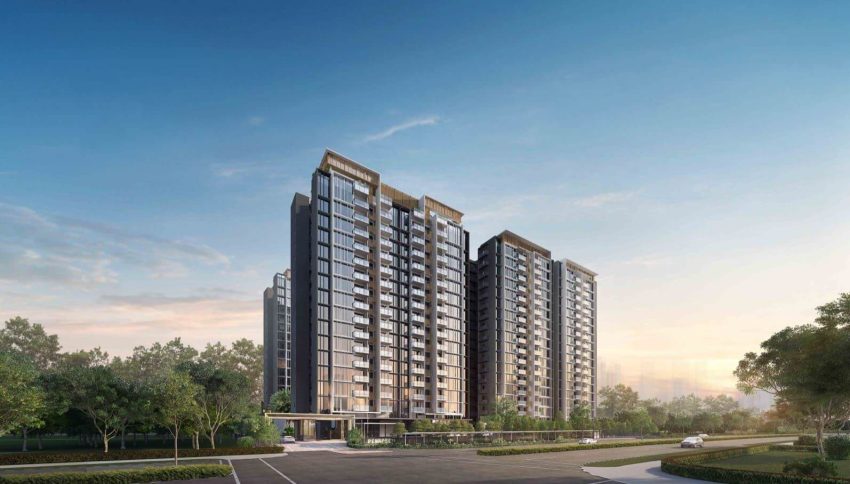
Singapore’s real estate market in 2026 is no longer defined solely by traditional prime districts. Instead, value is increasingly shaped by how well new residential corridors integrate lifestyle, infrastructure, and long-term urban planning. Two developments—one in the western growth zone and the other along the revitalised East Coast—offer insight into how buyers and investors are recalibrating their expectations. Tengah Garden Residences and Vela Bay reflect the broader transformation of Singapore housing, where functionality, community, and lifestyle alignment are becoming decisive factors.
The Shift Toward Planned Town Living in Singapore
Over the past decade, Singapore’s approach to urban development has evolved toward decentralisation. New towns are no longer conceived merely as housing estates, but as self-sustaining ecosystems. Tengah is a prime example of this shift. Designed as a smart forest town, it places equal emphasis on environmental integration, liveability, and long-term sustainability. Within this context, Tengah Garden Residences plays a critical role in shaping how residents experience daily life.
The Tengah Garden Residences facilities are intentionally designed to support wellness, social interaction, and convenience. Instead of isolating amenities into a single clubhouse, facilities are distributed throughout the development, encouraging frequent use and organic community interaction. This approach resonates strongly with modern buyers who value practical lifestyle benefits over ornamental features.
Facilities as a Measure of Residential Quality
In Singapore’s competitive housing market, facilities increasingly serve as a benchmark of overall residential quality. Developments that provide meaningful communal spaces—fitness zones, family-friendly pools, and adaptable social areas—tend to attract longer-staying residents. For investors, this translates into lower turnover and more stable rental demand.
In Tengah’s case, the emphasis on usable, everyday facilities aligns with the town’s broader planning philosophy. As the western region continues to develop with new employment nodes and educational institutions, residential projects that already deliver lifestyle completeness are likely to remain highly relevant.
East Coast Living and the Evolution of Urban Demand
While Tengah represents a new chapter in planned town living, the East Coast tells a different story—one of renewal and lifestyle-driven demand. Long favoured for its coastal charm and established amenities, the East Coast has gained renewed attention with improved transport connectivity and urban rejuvenation efforts. Within this landscape, Vela Bay reflects how modern developments are responding to changing urban preferences.
The urban lifestyle Vela Bay offers is rooted in proximity and efficiency. Residents benefit from close access to transport links, recreational spaces, and established dining and cultural precincts. This type of lifestyle appeals strongly to professionals, downsizers, and tenants who prioritise time efficiency and experiential living over sheer unit size.
Why Urban Lifestyle Still Commands a Premium
In Singapore real estate, urban lifestyle properties continue to command strong demand due to their scarcity and resilience. Developments that successfully integrate location, design, and lifestyle amenities often outperform the broader market during periods of uncertainty. Vela Bay’s positioning within the Bayshore precinct reflects this trend, offering a modern residential option within a mature and well-connected district.
For investors, properties aligned with an urban lifestyle tend to attract higher-income tenants and enjoy consistent occupancy. This makes such developments particularly attractive for those seeking capital preservation alongside steady rental performance.
Comparing Two Growth Narratives
From a market perspective, Tengah Garden Residences and Vela Bay represent two different but complementary growth narratives in Singapore real estate. Tengah is driven by transformation—new infrastructure, decentralised employment, and long-term population inflow. The East Coast, by contrast, is driven by refinement—enhanced connectivity, limited new supply, and enduring lifestyle appeal.
Both narratives are supported by government planning and demographic trends, making them relevant for buyers with different objectives. First-time homeowners may be drawn to Tengah’s value proposition and family-friendly environment, while seasoned investors may favour the stability and prestige associated with East Coast living.
What This Means for Buyers and Investors in 2026
For buyers navigating Singapore’s housing market today, the key question is no longer “which district is best,” but “which lifestyle aligns with long-term goals.” Developments like Tengah Garden Residences demonstrate how thoughtful facilities and town planning can support family life and future growth. Vela Bay illustrates how urban lifestyle developments remain highly relevant in a city where time, connectivity, and experience matter more than ever.
From an investment standpoint, diversification across different growth corridors can be a strategic way to balance upside potential and market resilience.
Conclusion: Reading the Market Beyond Headlines
Singapore’s real estate story in 2026 is one of intentional development and lifestyle alignment. Tengah Garden Residences reflects the future of planned, community-oriented living supported by functional facilities and sustainable design. Vela Bay captures the enduring appeal of urban coastal living, refined for modern expectations.
For guest post readers seeking insight into where Singapore housing is heading, these two developments highlight an important truth: the most successful properties are those that fit seamlessly into how people actually live, work, and move in the city today.