Residential planning has a direct influence on how comfortably and conveniently people experience their homes. While individual units receive much of the attention during a property search, the arrangement of buildings, pathways, amenities, landscaping, and shared spaces can have an equally important effect. In Singapore, where residential developments must make efficient use of limited urban land, thoughtful planning can create environments that support privacy, accessibility, recreation, and community interaction. For buyers, understanding these planning strategies can help identify developments designed around real everyday needs rather than appearance alone.
Efficient Site Planning Creates Better Connections
A well-planned residential development should make movement between different areas straightforward. Entrances, car parks, lifts, communal facilities, pedestrian routes, and residential blocks should be connected logically.
Efficient circulation can reduce unnecessary walking and make everyday tasks easier. Residents should be able to reach shared facilities without complicated routes while still maintaining separation between private and public areas. Developments such as The Serra Residences demonstrate why the overall site arrangement can be an important consideration when evaluating residential convenience.
Building Orientation Influences Comfort
The positioning of residential blocks can affect natural light, ventilation, views, privacy, and noise. Thoughtful orientation can help individual homes receive suitable daylight while reducing direct overlooking between neighbouring units.
Building placement should also consider the surrounding roads and public spaces. Homes positioned away from high-traffic areas may benefit from a quieter environment, while appropriate landscaping can provide additional separation.
Pedestrian Planning Supports Everyday Mobility
Comfortable pedestrian routes can make a residential environment easier to navigate. Continuous pathways, safe crossings, sheltered sections, accessible entrances, and suitable lighting can improve daily movement.
Good pedestrian planning is particularly useful for families with young children and older residents. Buyers should walk through a development during a viewing rather than assessing pathways only from a site plan. The practical experience of moving between facilities can reveal whether the design is genuinely convenient.
Greenery Can Improve the Residential Environment
Landscaping can serve both aesthetic and practical purposes. Trees, gardens, planted walkways, and green buffers can soften the appearance of buildings while providing shade and creating more pleasant outdoor areas.
Greenery can also help separate active spaces from private homes. Projects such as Dunearn Green highlight why buyers may consider how landscaping is integrated into the wider residential environment rather than treating it as a purely decorative feature.
Shared Facilities Should Be Strategically Positioned
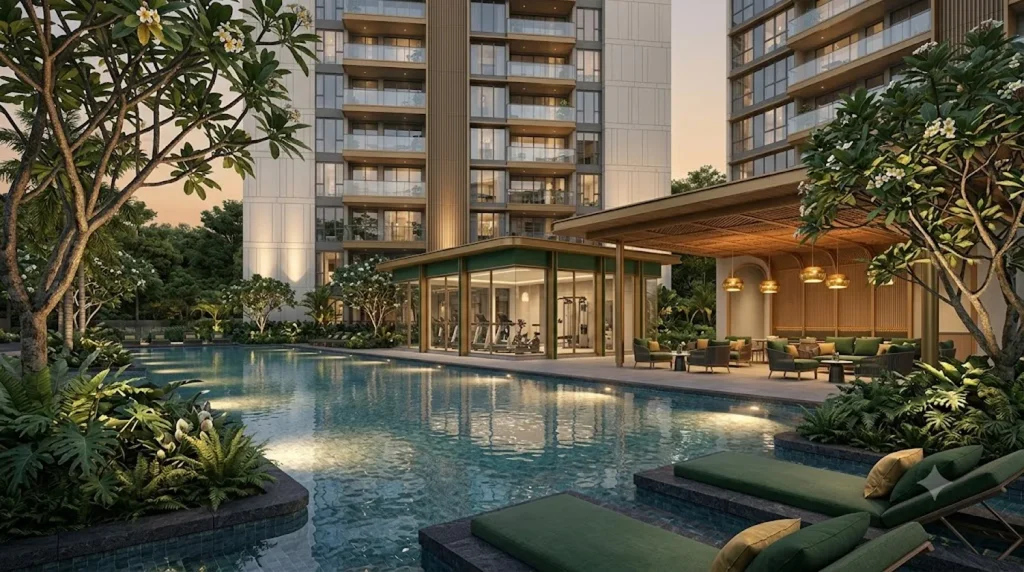
The location of communal facilities can influence how useful and comfortable they are. Swimming pools, gyms, playgrounds, lounges, and function rooms should be accessible without creating excessive noise or activity near private living spaces.
Active facilities may be better positioned away from quieter residential zones, while landscaped areas can provide transitions between different uses. Good planning creates convenient access while protecting residents’ privacy and comfort.
Privacy Requires Deliberate Planning
Privacy is not simply determined by the distance between buildings. Window positions, balconies, corridors, entrances, lift lobbies, and communal spaces can all influence how much residents see and hear from neighbouring areas.
Landscape screening, appropriate building orientation, and careful placement of shared facilities can reduce potential privacy concerns. Buyers should examine sightlines from windows and balconies and consider whether nearby activity could affect their preferred level of privacy.
Accessibility Should Be Built Into the Design
Residential environments should accommodate residents with different mobility needs. Step-free entrances, lifts, accessible pathways, suitable ramps, and well-positioned seating can make shared spaces easier to use.
Accessibility also benefits households with young children, residents carrying shopping, and anyone recovering from temporary mobility limitations. A development that is easy to navigate can remain more practical as residents’ needs change over time.
Outdoor Spaces Add Flexibility
Gardens, terraces, lawns, and recreational areas provide residents with alternatives to staying inside their units. These spaces can support exercise, relaxation, family activities, and informal social interaction.
The best outdoor spaces are designed for actual use. Shade, seating, drainage, lighting, privacy, and accessibility all influence whether residents will want to spend time there. Buyers should consider these practical qualities instead of judging landscaping solely by visual appearance.
Community Spaces Can Encourage Interaction
Well-positioned communal spaces can create opportunities for residents to meet naturally. Seating areas, gardens, lounges, playgrounds, and multipurpose rooms can support informal interaction without requiring organised events.
A strong community does not require every resident to be highly social. Good planning provides different environments so people can choose between active social areas and quieter spaces. This balance can help create a welcoming environment while respecting individual preferences.
Noise Management Protects Residential Comfort
Traffic, recreational facilities, mechanical equipment, loading areas, and neighbouring buildings can all contribute to noise. Site planning can reduce some of these effects by placing active areas and service functions appropriately.
Buyers should consider the location of bedrooms relative to roads, lifts, pools, playgrounds, and other potentially active spaces. Visiting a development at different times can provide a clearer understanding of its acoustic environment.
Sustainability Can Be Incorporated Into Planning
Modern residential planning increasingly considers energy and resource efficiency. Building orientation, shading, natural ventilation, landscaping, efficient lighting, and water management can all contribute to a more sustainable development.
These features can also provide direct benefits to residents. Shaded walkways may be more comfortable, greenery can improve outdoor spaces, and efficient systems may reduce unnecessary resource consumption. Sustainable planning is most effective when it supports both environmental objectives and everyday usability.
Planning Should Consider Future Needs
A well-designed residential environment should remain useful as household needs change. Flexible communal spaces, accessible pathways, adaptable layouts, and a variety of amenities can support residents through different stages of life.
Buyers should think beyond their current routines. A home that works well for a couple may need to accommodate children, older family members, remote work, or changing mobility requirements in the future.
The Wider Neighbourhood Matters Too
Residential planning does not stop at the development’s boundary. Connections to public transport, schools, parks, shopping areas, healthcare facilities, and community spaces can significantly influence everyday convenience.
A thoughtfully designed condominium can provide an excellent internal environment, but its location determines how easily residents can access the wider city. Buyers should therefore evaluate the development and its neighbourhood together.
Planning Shapes Long-Term Residential Quality
Residential planning strategies influence many aspects of daily life, from movement and privacy to recreation, greenery, accessibility, and community interaction. These elements may not always be immediately obvious during a property viewing, but they can affect residents’ experience for years.
Homebuyers should look beyond the appearance of individual units and examine the complete development. A well-planned residential environment should make ordinary routines easier while providing comfortable spaces for relaxation, recreation, and social interaction. When site planning is thoughtful and practical, it can turn a collection of homes into a more functional and enjoyable place to live.